
- UK

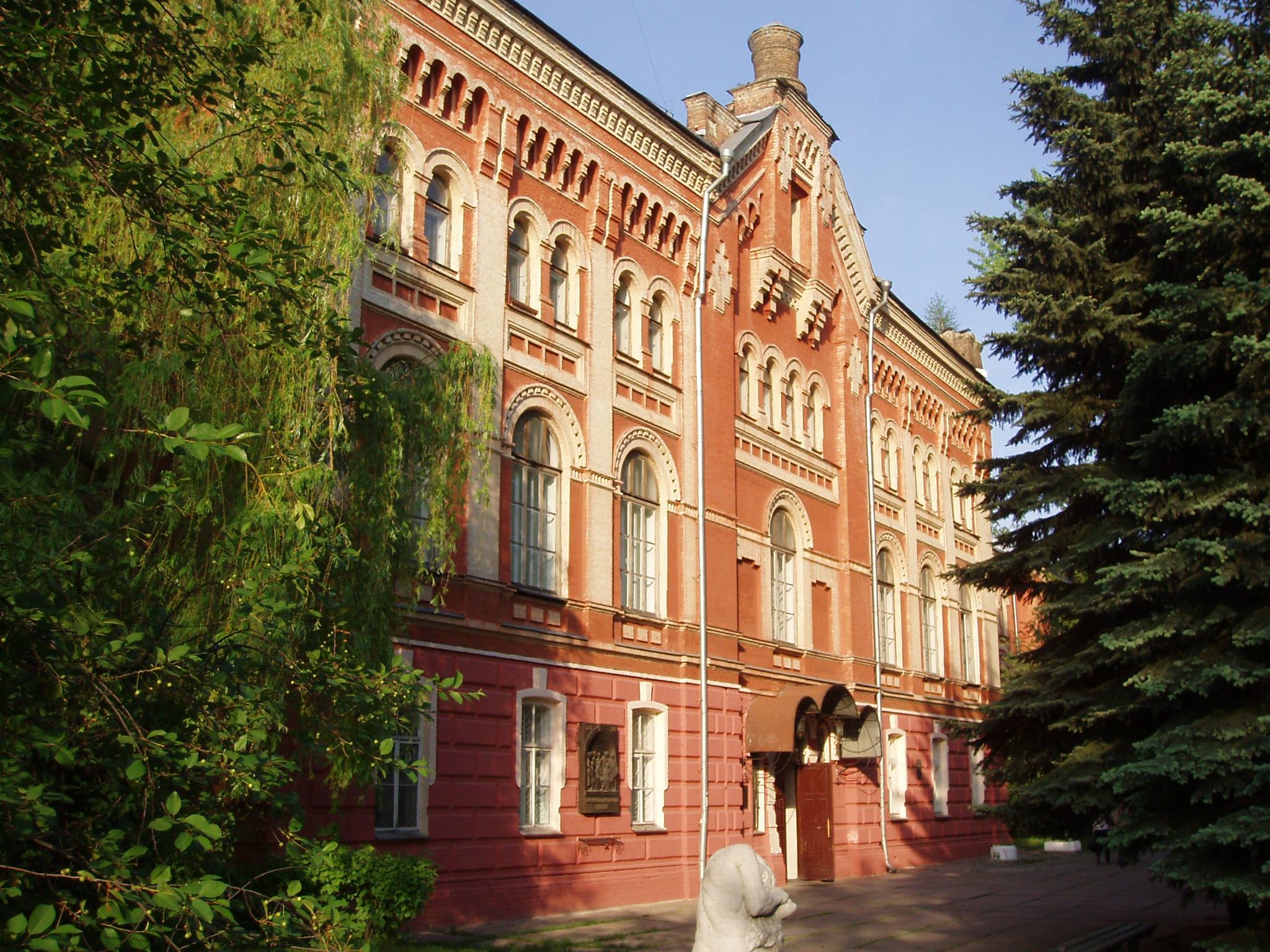
On Voznesenskyi Descent, amid Kyiv’s historic streets, rises a stately building now known as the National Academy of Fine Arts and Architecture. Yet its story began long before, and every floor, every architectural detail carries echoes of the city’s past.
This site has deep historical roots. As early as 1121, chronicles mention it as Kopyriv End. During construction of the academy, archaeologists uncovered the foundations of an 11th-century church, likely belonging to St. Simeon’s Monastery, founded by Prince Sviatoslav Yaroslavich. Nearby, they also unearthed the remains of another 12th-century church.
In the 16th century, the plot was the courtyard of the Catholic bishop. A century later, by order of Hetman Bohdan Khmelnytskyi, it passed to the Kyiv Metropolitan. Around that time, a wooden Church of the Ascension (Voznesenska Church) with a bell tower was erected. Rebuilt in the 18th century, it survived until the early 19th century. Its memory lingers in the very name of the street - Voznesenskyi Descent.
By the late 19th century, a new building was urgently needed for the Kyiv Theological Seminary, as the old one in Podil could no longer accommodate the growing number of students. In 1894, chief diocesan architect Volodymyr Nikolaiev drafted the first project, though it was later revised by architect Yevhen Morozov. Construction began in 1899 under the supervision of architect Yermakov.
The building itself impressed with its thoughtful design. Predominantly one-sided in layout, the central block featured a double-sided plan. Above the central entrance stood the Church of the Three Hierarchs - today serving as the academy’s assembly hall. The brick faсades were enlivened by the rhythm of arched windows, with larger openings on the second floor lending a sense of lightness and air. Romanesque influence is evident in the repeated arches: three axes and a triangular gable on the central faсade, with five large arches above the entrance, three on the side projections, and two above the main rows.
The interior was modest, with little ornamentation apart from the church, which still preserves its round columns and remarkable acoustics. Designed to accommodate 500 students, the seminary was both spacious and functional.
Yet it served as a seminary for only sixteen years. In 1917, the building was transferred to the newly established Academy of Fine Arts, founded through the efforts of leading cultural figures such as Mykola Biliashivskyi, Mykhailo Boichuk, the Krychevsky brothers, Oleksandr Murashko, and Heorhii Narbut, with the support of Mykhailo Hrushevskyi and Ivan Steshenko. The academy’s statute was approved on December 5, 1917, with Fedir Krychevskyi as its first rector, succeeded in 1919 by Narbut.
In its early years (1918–1920), the academy enrolled between 36 and 100 students. In 1922, it was reorganized as the Kyiv Institute of Plastic Arts, later merging with the Kyiv Architectural Institute. It soon developed into a multidisciplinary institution, with faculties of painting, architecture, printing, and pedagogy. Its faculty included such luminaries as Oleksandr Bohomazov, Mykhailo Boichuk, Fedir Krychevskyi, Kazymyr Malevych, Sofiia Nalepinska-Boichuk, and others.
During World War II, the institute was evacuated - first to Samarkand, then to Zagorsk. In wartime Kyiv, the building served as a labor exchange and workshops. The academy returned to its home in 1944.
In 1992, it was granted the status of the National Academy of Fine Arts and Architecture. Four years later, in 1996, a memorial was unveiled on its grounds to honor artists repressed by the Bolsheviks, bearing more than forty names.
Today, the academy stands as Ukraine’s foremost institution of art education, nurturing new generations of artists, architects, and designers, and carrying forward the nation’s rich artistic traditions.